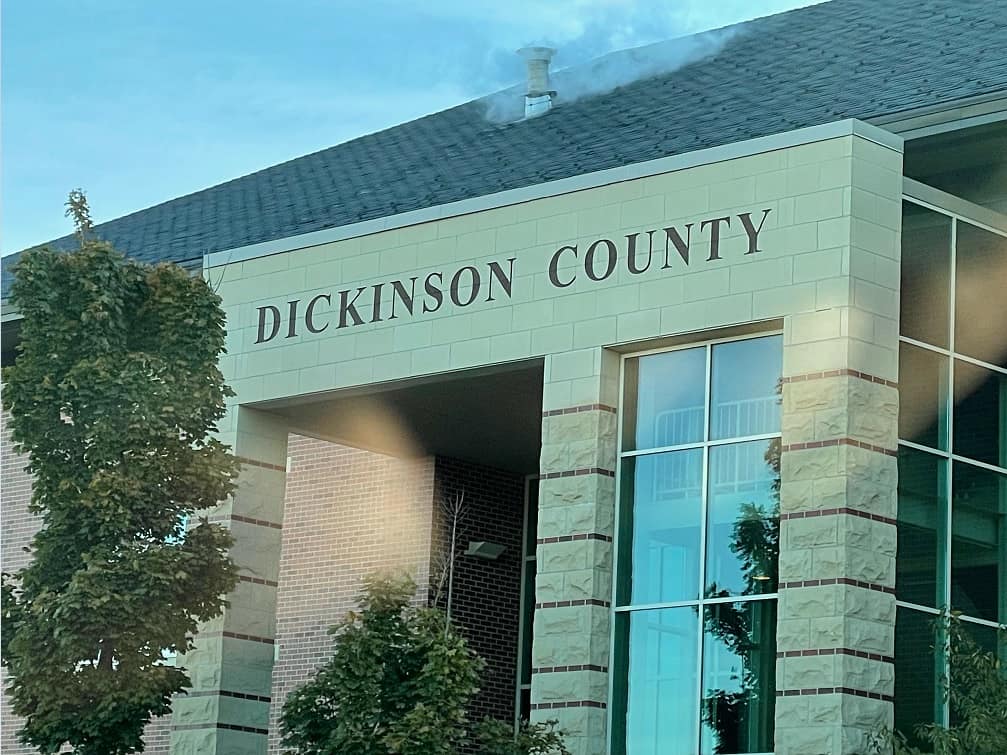




(Spirit Lake)– Controversy over what, if anything, should be done about the outlet at Lower Gar was revived at Tuesday’s Dickinson County Board of Supervisors meeting.
Jeff McClenathan, Chief of the Omaha District U-S Army Corps of Engineers Hydraulics Section, was at the meeting with a presentation on improvements made on outlets at Big Spirit Lake and Lower Gar during the 1993 flood. Controversy has been ongoing since then on whether further improvements are needed at Lower Gar. The main issue is over whether or not tubes should be replaced with a bridge or box culverts, or whether a road that goes over the tubes should be completely taken out. The issue has been coming and going for years after subsequent studies found that West Lake Okoboji tends to hold water longer than other lakes in the Okoboji chain.
Those in favor of box culverts or a bridge say the change is needed to drop the level of West Lake Okoboji faster. Opponents say there isn’t enough evidence in studies to suggest that would actually be the case. They maintain improvements made in 1993 are more than adequate. But McClenathan sited findings that indicate a larger outlet would reduce flood elevations on West Lake Okoboji. He also sited findings that indicate the Trigg’s and Sawmill Bridges are not acting as restrictions upstream.
The city of Milford, which has jurisdiction near the outlet, staunchly opposes any proposal to install a bridge, and city officials indicated Tuesday they would also oppose any effort to do away with the road. But city councilman Bud Kyle said they may be willing to look at other alternatives…such as the box culverts.
After further discussion, McClenathan said the Corps of Engineers, at the county’s request, could do a feasibility study which could take as much as three years to complete. McClenathan said the timeframe for the study should be less since most of the data is already in place from previous studies the corps has done. The cost would be split 50-50 between the county and the corps through a federal program that authorizes up to 100-thousand dollars to do an assessment to see if a proposed project meets federal criteria. The supervisors directed McClenathan to send them more information regarding that.